Trying to choose between West Lake Hills and central Austin? You are not alone. Both offer premium addresses, but they behave very differently when it comes to prices, taxes, lot sizes and development rules. If you want a clear, side-by-side view so you can buy or sell with confidence, this guide breaks down the facts that matter and how to act on them. Let’s dive in.
What defines each market
West Lake Hills is a small, high-end enclave in the hills just west of downtown. Inventory is limited, lots are large, and many buyers prioritize privacy, views and access to Eanes ISD.
Central Austin describes the core neighborhoods close to downtown. Think a wider mix of homes and condos, higher turnover, and stronger walkability. You will find more options across price points and faster-moving inventory.
Price and volume at a glance
City-level context helps. According to the December 2025 Central Texas Housing Report, the City of Austin’s median sale price was about $550,000, a useful anchor for reading neighborhood medians across the city. You can review the latest update in the UnlockMLS monthly report.
West Lake Hills sits far above that city median. Typical prices often land in the high six figures to multi-million range. Because so few homes trade in any given month, a single luxury closing can swing the median up or down. The result is a premium market with more volatility on paper than you may see on the ground.
Central Austin neighborhoods also command a premium relative to the city median, but the sample size is much larger. More monthly sales smooth out the data. You will see a broader continuum of product types, from renovated bungalows to townhomes and condos, which makes pricing bands and absorption easier to read.
What this means for you:
- If you are buying in West Lake Hills, evaluate value by lot, setting and view rather than relying on a one-month median.
- If you are buying in central Austin, you have more comps and faster feedback on price.
- If you are selling in West Lake Hills, lean into the scarcity story and school district value. In central Austin, position against recent comps and emphasize convenience and lifestyle.
Homes and lots you can expect
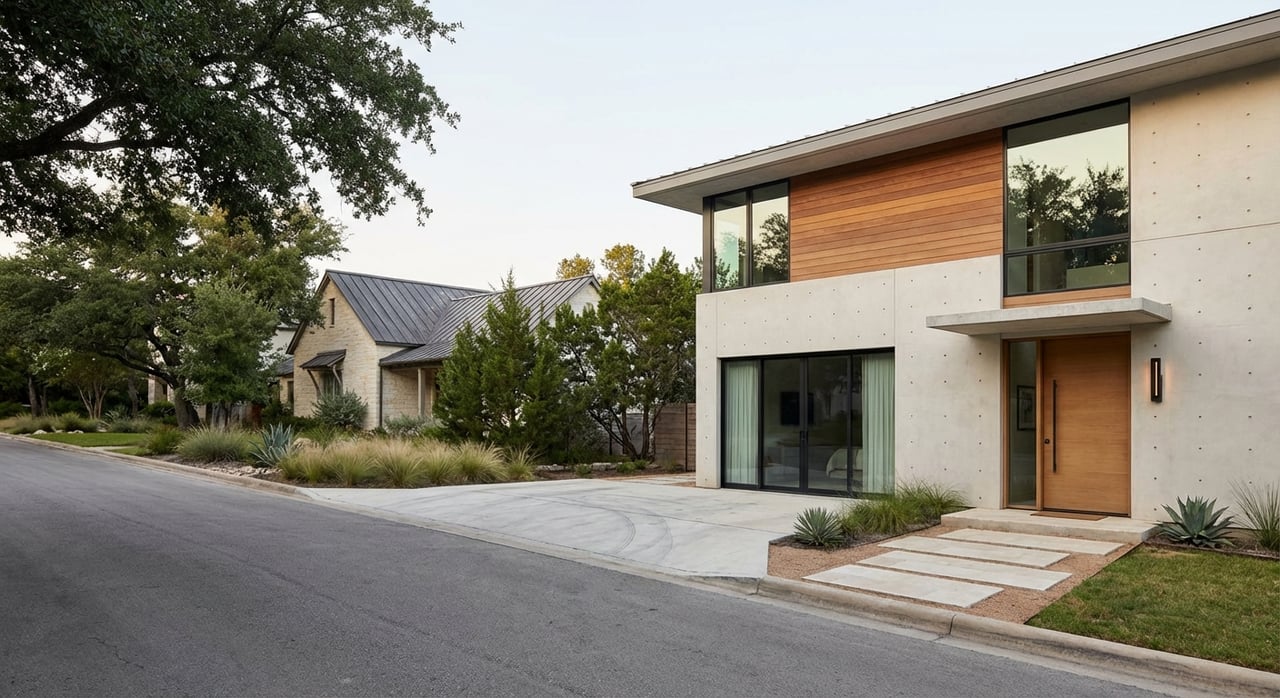
West Lake Hills tends to offer larger, more private sites. Many properties sit on roughly half an acre or more, with a meaningful number of full-acre estates. The product mix ranges from mid-century or Mediterranean homes to contemporary custom builds. The size and topography of lots often drive value and design.
In central Austin, lot sizes are typically smaller. Many single-family parcels fall in the six to ten-thousand square foot range, and attached or condo products add density. You will see older cottages and mid-century homes alongside modern infill. That mix creates entry points below West Lake Hills pricing and supports higher turnover.
Building rules and timelines
Rules shape what you can do with a property, and they differ across these areas.
West Lake Hills is its own city with active oversight. The municipality’s Zoning and Planning Commission reviews development, and the city enforces tree and vegetation protections that can affect design, grading and permit timelines. You can read more on the West Lake Hills Zoning & Planning Commission page and the city’s tree and vegetation ordinance.
Inside the City of Austin, evolving land-use policy has expanded some housing options in single-family areas. The city’s recent “HOME” initiative, as covered by local media, increases flexibility for additional units in some locations. See policy context in this overview of Austin’s HOME program changes.
Bottom line: West Lake Hills often requires more site-sensitive design and longer permitting for major changes. Central Austin may offer more pathways for adding units or pursuing infill, though requirements still apply.
Taxes and annual carrying costs
Texas property taxes stack across several entities, and the mix is different between these two areas. Rates shown are for the FY 2025–26 cycle and are applied per $100 of taxable value.
West Lake Hills stack: City of West Lake Hills, Travis County, Eanes ISD, Austin Community College, and Central Health. The city’s FY 2025–26 rate was adopted as $0.176783, as reported in local coverage of the city budget. See the West Lake Hills budget and tax-rate coverage. County and district rates are published by their respective entities, including Travis County and Eanes ISD historical tax rates.
Central Austin stack: City of Austin, Travis County, Austin ISD, Austin Community College, and Central Health. You can confirm the city’s adopted FY 2025–26 property tax rate on the City of Austin tax rates page and Austin ISD’s rate on the district’s taxes and debt page.
Illustrative example using $1,000,000 in taxable value:
- West Lake Hills: adding the FY 2025–26 rates for City of West Lake Hills, Travis County, Eanes ISD, ACC and Central Health totals approximately 1.606251 per $100. Estimated annual tax is about $16,062.51.
- Central Austin: adding the FY 2025–26 rates for City of Austin, Travis County, Austin ISD, ACC and Central Health totals approximately 2.096485 per $100. Estimated annual tax is about $20,964.85.
That is roughly a $4,900 annual delta at the same taxable value. Your bill will vary with exemptions and any special districts, so always calculate from the current taxable value shown for the specific property.
Schools and how they shape demand
Schools influence purchase decisions and pricing in both areas. Most of West Lake Hills is served by Eanes ISD, a district known for strong performance metrics and high demand. For objective data points, review the Texas Tribune’s profile for Westlake High in Eanes ISD.
Central Austin is largely served by Austin ISD, a bigger district with a wider range of campus outcomes. Recent accountability cycles show system variability, with strong campuses alongside schools working toward improvement. If schools are a priority in your search, verify attendance zones by address and consider both public and private options.
What this means for you:
- In West Lake Hills, the Eanes ISD effect is a durable driver of demand and pricing.
- In central Austin, evaluate campus-by-campus data for the addresses you are considering.
Lifestyle, commute and amenities
West Lake Hills delivers a quiet, hill-country feel just minutes from downtown by car. You will find larger private yards, trail access and a low-density streetscape. Daily errands usually require driving.
Central Austin offers stronger walkability and proximity to restaurants, retail and cultural venues. Many homes sit within short commutes of major employment centers and transit options. This convenience also fuels rental demand for smaller-footprint homes and condos.
Liquidity, rental potential and risk profile
West Lake Hills: Low inventory and high price points create scarcity. That typically supports values and insulates against short-term swings, but it also means fewer comps and lumpy median data. When evaluating a purchase or planning a sale, weight the land, view, and street context heavily.
Central Austin: Higher transaction volume brings greater liquidity and more investor participation. Smaller units and condos can produce stronger rental yields than large single-family estates, though policy changes can affect what you can build and how you can lease. Track monthly city trends in the UnlockMLS market report to stay grounded in current absorption and pricing.
Which market fits your goals?
Use this quick lens to focus your decision:
- Choose West Lake Hills if you value privacy, large lots, views, and a small-city setting with Eanes ISD access. Expect higher purchase prices, lower walkability, and more site-sensitive permitting.
- Choose central Austin if you prioritize walkability, shorter commutes, and a wider selection of homes and condos with stronger resale liquidity.
Buyer and seller action steps
For buyers
- Define must-haves by lot, setting and lifestyle first, then price band.
- In West Lake Hills, analyze lot value and site constraints early. Budget time for tree review and permitting if you plan to add or rebuild. Start with the city’s Zoning & Planning resources.
- In central Austin, confirm what the current land-use rules allow on a given lot, especially if you plan to add a unit. Read up on the HOME program context, then verify specifics with the city.
- Run tax scenarios from taxable value, not list price. Pull city and district rates from the City of Austin, Travis County, Eanes ISD or Austin ISD.
For sellers
- West Lake Hills: Lead with land, setting and school district value. Premium photography, staging and cross-channel syndication are essential at this price point. Price within a tight comp set and be ready to educate buyers on site features and recent high-quality builds.
- Central Austin: Position for lifestyle and convenience. Use recent neighborhood comps and highlight any flexibility for additional units, while staying accurate about current city rules.
If you want help translating these differences to a specific address or portfolio plan, connect with Courtney Hohl to Book a Private Market Consultation.
FAQs
How do West Lake Hills and central Austin home prices compare as of late 2025?
- City of Austin’s December 2025 median was about $550,000 per the UnlockMLS report; West Lake Hills routinely trades in the high six figures to multi-million range, but small sample sizes make monthly medians volatile.
What are the key property tax differences between West Lake Hills and central Austin?
- Using FY 2025–26 rates, a $1,000,000 taxable value example is about $16,062 in West Lake Hills vs about $20,965 in central Austin; confirm current rates on the City of Austin site, Travis County, Eanes ISD and Austin ISD.
How do permitting and building rules differ in West Lake Hills vs Austin city limits?
- West Lake Hills has its own review process and strict tree protections, detailed on the Zoning & Planning page and tree ordinance; Austin has evolving policies like the HOME initiative that can allow more units in some areas.
What lot sizes are typical in each area?
- West Lake Hills often features roughly half-acre to full-acre lots, with value driven by topography, trees and views; many central Austin single-family lots are closer to 6,000–10,000 square feet, with condos and townhomes adding density.
How do schools factor into demand in West Lake Hills and central Austin?
- Most of West Lake Hills is in Eanes ISD, which posts strong academic indicators (see Westlake High’s profile); central Austin is served by Austin ISD with a wider range of outcomes by campus, so verify zones by address.